
Reviewed · CAPPADOCIA
Fire of Anatolia – Istanbul, Cappadocia, Pamukkale, Ephesus, Troy
Eleven days, and Turkey feels huge. This route strings together Istanbul, Cappadocia, and the Aegean with guided stops that keep the focus on real sights, not wasted time. You also get a smooth plan for transfers, entry fees, and an English-speaking guide, so you can spend your energy looking up, taking photos, and asking questions.
I especially like the guide support. Past groups have praised guides like Irem for adapting to needs and managing crowded places calmly, plus Fatih Karci for adding thoughtful details that made the day click. I also like that the trip includes entrance fees and plenty of meals, with breakfast most mornings and dinner included multiple nights.
The one thing to think about is the pace. This is a high-hit itinerary with long driving days and walking at major sites, so it suits you best if you are comfortable with moderate physical effort and a packed schedule.
Key highlights
- Small group size (max 20) helps at crowded churches and ancient sites
- Entrance fees, transfers, and an English-speaking guide keep the day moving
- Istanbul plus a real Bosphorus transit (public ferry with guided explanations) saves you time
- Cappadocia includes both open-air sights and underground areas
- Ephesus pairs big ruins with museum time and a carpet-making stop
- Gallipoli adds WWI context before you return to Istanbul
Hitting Istanbul first, with Europe and Asia in the same day
Istanbul is the perfect opener because it sets the tone for the whole trip: layers of empire, religion, and street life all stacked on top of each other. You start with a hotel transfer, then you get real free time to orient yourself.
On the guided day, you’ll cover the classic icons in a sensible order. You’ll see the Topkapi Palace area, including Hagia Irene, plus the Blue Mosque, St Sophia Museum, and the Hippodrome. That mix matters because it gives you a quick map of how Ottoman power and Byzantine roots show up in everyday Istanbul.
Practical note: these sights are big, and crowds can be thick. Going with a guide helps because you spend less time guessing where to stand for the best views and more time understanding what you’re looking at. If you’re sensitive to long indoor lines, plan to move through sites calmly and take breaks when you can.
You can also read our reviews of more tours and experiences in Istanbul.

Topkapi, Hagia Irene, Blue Mosque, St Sophia, and the Hippodrome
This is one of the smartest “start strong” days on the calendar. Topkapi gives you a sense of how rulers displayed power, while Hagia Irene adds a quieter piece of the complex church story. St Sophia Museum is a must-see anchor, because it’s a massive visual reminder of how buildings can change identities over centuries.
Then you head to the Blue Mosque, which is both a religious landmark and an iconic photo stop. The Hippodrome rounds it out by showing you the public stage of the empire, not just the palace walls.
A tip: wear something you can stand and walk in comfortably. That sounds basic, but it matters because you’ll want to linger at details, especially once you see how much decorative work is still visible after so many eras.
Bosphorus crossings that actually teach you something
Instead of just taking a generic cruise, you get two ways to look at the same waterways. There’s an option for a half-day Bosphorus cruise, and later you’ll do a one-hour Bosphorus cruise using a public ferry, with your guide explaining historical points along the route.
That guided ferry piece is worth paying attention to. It’s not just “pretty water.” You’re getting a moving timeline of where power and trade connected across the water. You also get the benefit of local-style transit, which tends to feel less staged than big tourist-only boats.
If you’re planning your photos, bring some water and keep an eye on the wind. Ferry days can shift quickly with weather, and having a simple plan for your camera and phone saves you from rushing.
Flying to Cappadocia, then turning “out of this world” into a plan
Once the Istanbul chapters are done, you fly to Cappadocia and get transferred to your hotel. Then the schedule opens up a bit, because you have free time to settle in and explore at your own speed.
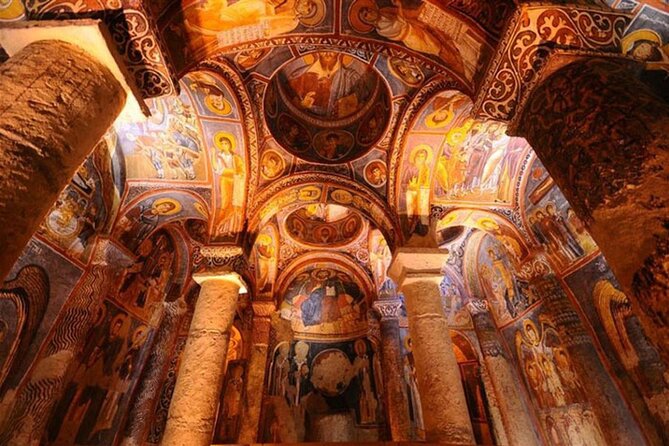
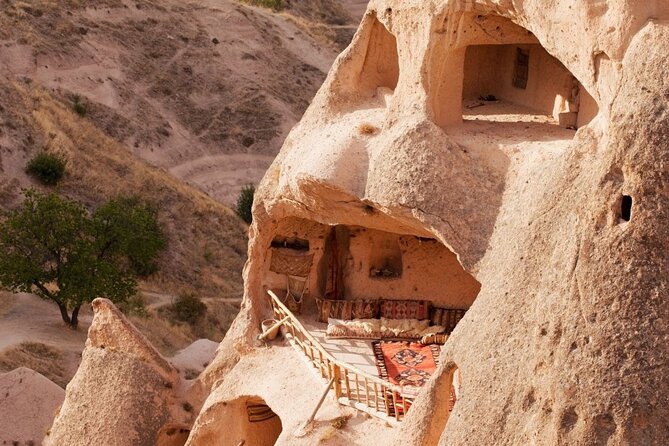
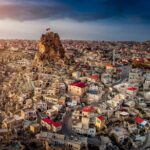
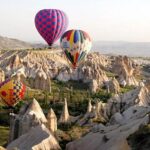
In Cappadocia, the goal isn’t just to stare at the fairy chimneys. The day is built around understanding what shaped these formations and how people used the space. You visit the Göreme Valley Open Air Museum, walk among the fairy chimney areas for photo opportunities, and then explore underground sections connected to an underground city.
This combination is the key. The open-air views give you the scale and the famous “lunar setting” feeling, but the underground city brings context: humans didn’t just live there for scenery. They lived there for protection, storage, and survival.
What to watch for: underground spaces can feel cooler and more enclosed, and you’ll still be walking. Comfortable shoes are non-negotiable here, because stone floors and uneven ground are part of the charm.
Cappadocia’s open-air museum plus underground city time
Göreme Valley Open Air Museum is the headline, and it works because it’s concentrated. You can get a lot of visual impact without needing to guess where to go. Seeing the fresco-rich spaces in the context of the valley helps you connect art to place.
Then you move into underground territory, including multiple levels of an underground city. That part can surprise people because it’s not just a tunnel. It’s a whole survival architecture, which makes the dramatic landscape feel even more intentional.
There’s also an optional Turkish folklore evening, featuring folklore and belly dancers. I like that there’s an option rather than forcing it. If you want a cultural night that’s different from museum time, it’s there. If you’d rather rest, you can.


Konya and Mevlana: a Sufi stop that changes your pace
After Cappadocia, the route heads to Konya, where the theme shifts from rock formations to spiritual life and scholarship. You visit the mausoleum of Mevlana Celaleddin Rumi at the Mevlana Museum.
This museum stop stands out because it’s not only about architecture. You’ll explore the adorned tomb area, plus exhibits that touch on Whirling Dervishes traditions and manuscripts. Even if you’re not deeply familiar with the background, the museum presentation makes it easier to understand why this figure matters across the world.
Then you add a Silk Road angle through a visit to the Çatalhöyük Museum. It’s a pairing that works because it moves you from one kind of heritage to another. Rumi represents a living tradition of devotion and poetry, while Çatalhöyük adds deep-time human settlement and early urban life.
One consideration: this day can feel longer, since you’ll be switching from one subject area to another. If you like learning through contrast, you’ll enjoy it. If you want only one theme each day, you might wish for more downtime.
Pamukkale travertines and Hierapolis ruins in one day
Pamukkale is the “wow” day for many people. You’ll visit the calcium travertines, stroll the white terraces, and then layer in the archaeology with the ruins of Hierapolis.
Hierapolis gives you the anchor sites: the Temple of Apollo and the Necropolis. This pairing is smart because it prevents the day from being only about one viewpoint. You get natural spectacle and then you add the human layer underneath it.
The terraces themselves are famously photogenic, but they can also feel crowded depending on timing. Aim to pace yourself. If you want the best experience, take your time on the slower sections and avoid rushing only for photos.
A simple packing tip: bring shoes you can handle on slick surfaces, and expect that you may want to move carefully on the steps and paths near the water’s edge.
Laodicea and a leather goods stop that’s more than a sales stop
Laodicea is one of the stops that often feels less “tour-busy” than the top-tier names, and that’s a big part of the value. You explore an ancient city associated with the Lycus River Valley region, and you’ll also hear about its earlier name, Diospolis.
That kind of context makes the ruins more meaningful. Instead of only seeing scattered stones, you understand the role the city played in regional power and life.
In the afternoon, you’ll enjoy a display of locally handcrafted leather goods. This is one of those moments where you can choose your involvement. You can look, learn about the materials and work, and move on when you’re done.
The upside here is pacing. You get a breather from the biggest-famous ruins while still seeing something ancient and historically placed.
Ephesus plus the archaeology museum, carpets, and wine tasting
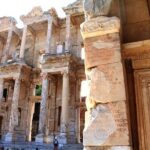
Ephesus is the type of site that rewards a guided plan. You’ll take a guided tour of Ephesus, including major highlights like the Temple of Artemis, the Library of Celsus facade, and the amphitheater.
Seeing those in one flow helps you understand what the city prioritized: worship spaces, civic knowledge, and mass gatherings. Then the Ephesus Archaeology Museum adds the “hold still and look closely” component. It’s where artifacts bring the site back to life in a more personal, tangible way.
After that, the day adds two local experiences that are easier than you’d expect in a big sightseeing day. You visit a carpet village to learn how carpets are made by hand and what affects their value. You’ll also head to Selçuk for a wine tasting experience.
I like this structure because it avoids making Ephesus only about Roman columns and marble dates. It gives you an “after the ruins” feeling, linking the craft culture of the region to what you’re seeing now.
Practical note: Ephesus involves walking in open areas. Bring sun protection and plan for breaks. Your guide can also help you keep track of what to see first so you do not feel like you’re chasing the whole site alone.
Pergamon’s acropolis and Troy with a modern museum touch
On the way to Troy, you stop in Bergama and climb up to the Pergamon acropolis. This is a chance to see how geography can shape power. You’ll view impressive temples and the library area that made Pergamon a recognized cultural and political center.
Then you continue on to Troy, a UNESCO World Heritage Site. You explore the ancient city and also visit the new, award-winning Troy Museum.
That museum detail matters, because it helps connect the stories many people already know with the archaeological reality. Instead of only wandering among ruins, you get a more organized context for what the site shows and how interpretations work.
Troy plus Pergamon makes a strong historical arc across the Aegean. It’s not just “more ancient stones.” It’s two different kinds of classical presence, one perched on a dramatic acropolis, the other tied to layered legends and modern presentation.
Wear sturdy shoes. The ground in archaeological zones can be uneven, and you’ll want your footing when you’re moving from viewpoint to viewpoint.
Gallipoli’s WWI battlefields, then back to Istanbul
Gallipoli is emotionally different from the rest of the tour. After breakfast, you visit WWI battlefields and memorials including Lone Pine and Chunuk Bair, plus ANZAC Cove and other key points like The Nek and Johnston’s Jolly. The day also includes original trenches and tunnels, which grounds the history in physical space.
This is not a quick “look and move on” stop. The memorial sites work best when you let yourself slow down and absorb the meaning. The inclusion of trenches and tunnels also helps you understand what soldiers faced, not just what headlines said.
Then you drive back to Istanbul. That final transit matters because it makes your last day feel like a proper return to the city rhythm, not a last-minute scramble to catch your flight.
Price and value: what $2,802.68 buys you in real terms
The price, listed at $2,802.68 per person for about 11 days, can feel steep until you compare it to what this itinerary is trying to do.
You’re paying for a lot of “big ticket” moving parts that are usually extra on DIY trips: an air-conditioned vehicle, entrance fees, transfers from and back to Istanbul airports, a professional English-speaking guide, and multiple meals including breakfast most mornings and dinner on seven nights. You also have domestic travel built in between regions, including a flight from Istanbul to Cappadocia.
In other words, you are paying to avoid the common DIY trap where costs pop up later, like guide time, entrance fees, and transportation you forgot to budget.
That said, you still need to budget for things that are optional or not included, like travel insurance and any suggested optional activities. If you love planning and researching every step, a DIY trip might look cheaper on paper. But if you want a guided, structured “best of” route without the headache, this is designed to deliver that comfort and control.
Who this tour fits best, and who should think twice
This is a great match if you want variety without juggling tickets and directions daily. You’ll get religious and cultural landmarks in Istanbul and Konya, prehistoric and ancient sites around the Aegean, surreal Cappadocia geology, and even a WWI historical deepening at Gallipoli.
It also fits well if you like small-group dynamics. With a maximum group size of 20, you tend to spend less time waiting and more time moving through sites efficiently.
You should think twice if you want a slow travel pace. The schedule is full, and you’ll face walking at major attractions, plus underground areas and memorial sites. The tour also calls for moderate physical fitness, so it’s best for you if you’re comfortable with that day-to-day level of effort.
Also, this experience requires good weather. If conditions are poor and the trip is canceled, you’ll be offered a different date or a full refund, but you do need flexibility.
Should you book Fire of Anatolia?
I’d book this if you want an all-in guided route through Turkey’s headline regions, with entrance fees and transfers handled and a group kept small enough to feel manageable. It’s also a good choice if you care about guidance quality, because named guides like Irem and Fatih Karci show up in real group experiences for adapting and adding thoughtful details.
I wouldn’t book it if you dislike tight pacing or if you want to build your own itinerary from scratch. This is a “see a lot, with structure” tour, not a flexible wander-at-your-own-pace vacation.
If that sounds like your travel style, you should feel confident. You’ll leave with a mental map of Turkey that connects the major places, not just isolated photo stops.
FAQ
How long is the tour?
The tour duration is listed as 11 days (approx.).
Where does the tour start and end?
It starts in Istanbul and ends back in Istanbul, with transfers to the airport for your onward flight on the last day.
What’s included in the price?
Included items listed are an air-conditioned vehicle, entrance fees, Istanbul airport transfers (inbound and outbound), a professional English-speaking tour guide for the duration, dinner on 7 nights, and breakfast on 10 mornings.
Are airport transfers included?
Yes. There is an inbound transfer from the Istanbul airport and an outbound transfer to the Istanbul airport.
Is there a group size limit?
Yes. The tour/activity has a maximum of 20 travelers.
What about tickets, like the phone version?
Mobile ticket is listed as a feature.
Is travel insurance included?
No. Compulsory travel insurance is listed as not included.
What optional activities are mentioned?
The tour mentions optional activities such as a half-day Bosphorus cruise and an optional Turkish folklore evening.
How physically demanding is it?
The tour notes that travelers should have moderate physical fitness level.
Does weather affect the tour?
Yes. The experience requires good weather, and if it is canceled due to poor weather, you are offered a different date or a full refund.


