
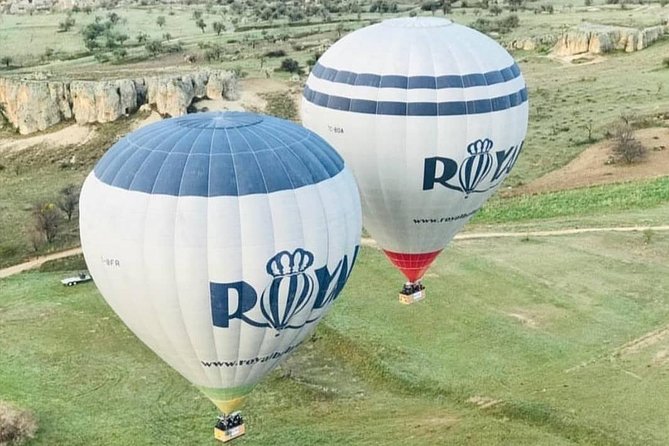
Wake above the valleys.
Sunrise balloons, cave churches, underground cities and sunset trails through Cappadocia — which route earns your day, what it costs and where to book.
Seven ways to understand Cappadocia.
A balloon flight owns the sunrise, but the region opens further on the ground: painted cave churches, valley roads, underground passages and the long light before sunset.
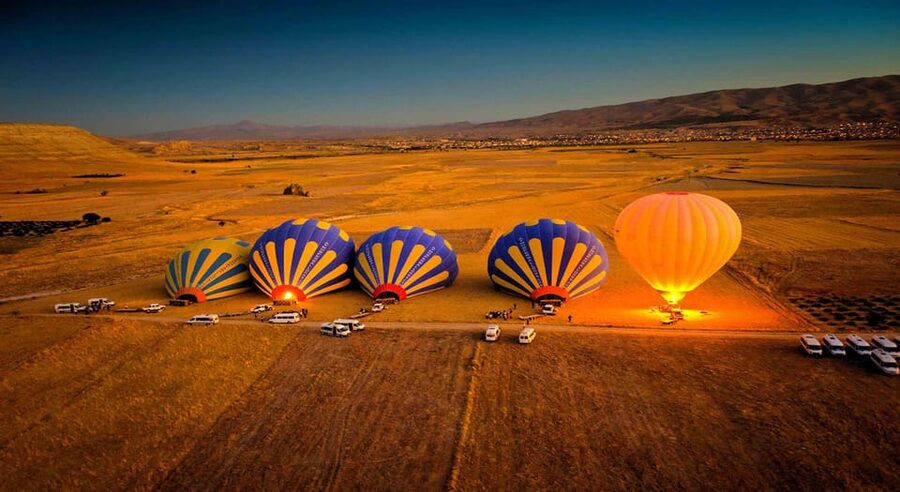
Goreme Hot Air Balloon Flight at Sunrise
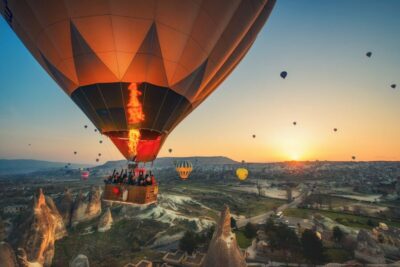
Rise early for a sunrise hot air balloon over Göreme’s fairy chimneys, with pickup, snacks, champagne, and a flight certificate in 3 hours.
From $142 per person
Read the review → ★ 5.0Sunrise favouriteCappadocia Hot Air Balloon Ride/ Turquaz BalloonsFrom $1753,330 reviews
 ★ 5.0Books out fastCappadocia Sunrise Hot Air Balloon Flight / Discovery BalloonsFrom $1192,882 reviews
 ★ 4.8Valley classicGoreme Hot Air Balloon Flight Over FairychimneysFrom $1592,347 reviews
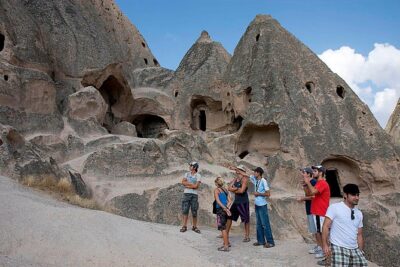 ★ 5.0Worth the early startGreen (South) Tour Cappadocia (small group) with lunch and ticketFrom $542,317 reviews
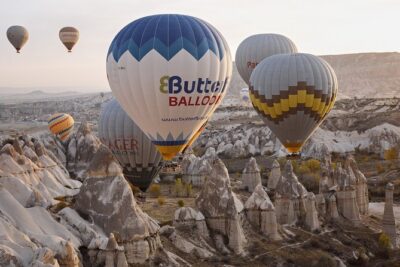 ★ 5.0Easy first-day winCappadocia Hot Air Balloons or Kelebek FlightFrom $1812,026 reviews
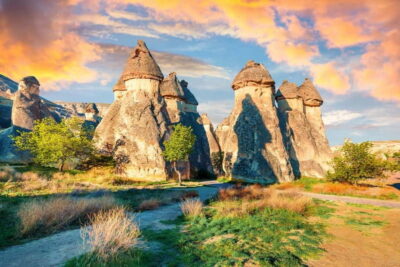 ★ 4.7Traveller favouriteFull Day Cappadocia Red and Green Combined Day TourFrom $301,998 reviews
The morning Cappadocia is famous for.
Hotel pickup happens in the dark. By first light the burners are glowing, the ridges turn rose and a hundred balloons drift above Göreme. Compare flight time, basket size and cancellation terms before choosing.
Which Cappadocia route fits your day?
The colour names are useful shorthand, not a quality ranking. Pick by the places, road time and walking you want, then compare the real itineraries behind each route.
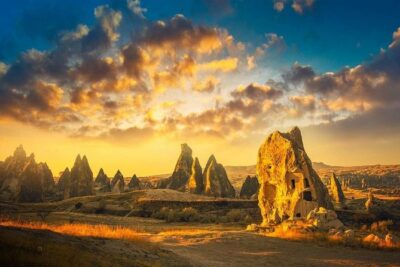 North Cappadocia
The Red Route
6 to 8 hours (approx.) · from $18 · 1,862 reviews
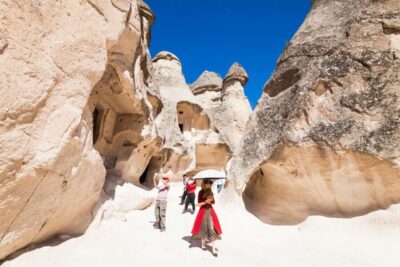
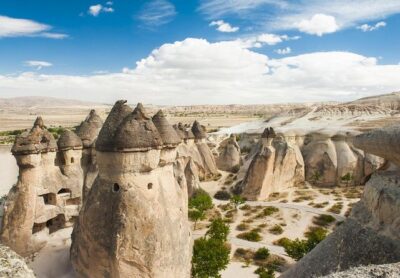
Göreme Open-Air Museum, Uçhisar viewpoints, Paşabağ and Avanos fit into the region’s cleanest first-day circuit. Choose it for cave churches, fairy chimneys and shorter road legs.
Compare Red Route days →
North Cappadocia
The Red Route
6 to 8 hours (approx.) · from $18 · 1,862 reviews
Göreme Open-Air Museum, Uçhisar viewpoints, Paşabağ and Avanos fit into the region’s cleanest first-day circuit. Choose it for cave churches, fairy chimneys and shorter road legs.
Compare Red Route days →
 South Cappadocia
The Green Route
from $51 · 1,471 reviews
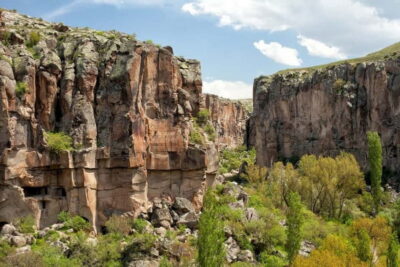
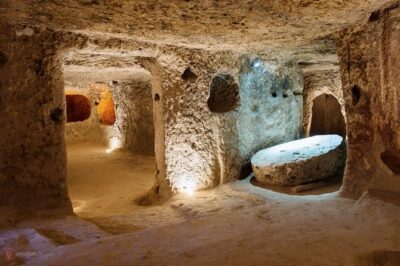
Underground cities, Ihlara Valley and Selime Monastery make this the longer, more varied day. It carries more driving and walking, but reaches landscapes the Red Route never sees.
Compare Green Route days →
Build the highlights
The mixed route
from $30 · 1,998 reviews
A selective day that combines the stops you care about most. It suits short stays and private groups, provided the itinerary names its underground city, valley and museum time clearly.
See mixed-route options →
South Cappadocia
The Green Route
from $51 · 1,471 reviews
Underground cities, Ihlara Valley and Selime Monastery make this the longer, more varied day. It carries more driving and walking, but reaches landscapes the Red Route never sees.
Compare Green Route days →
Build the highlights
The mixed route
from $30 · 1,998 reviews
A selective day that combines the stops you care about most. It suits short stays and private groups, provided the itinerary names its underground city, valley and museum time clearly.
See mixed-route options →
Cave rooms after the valleys empty.
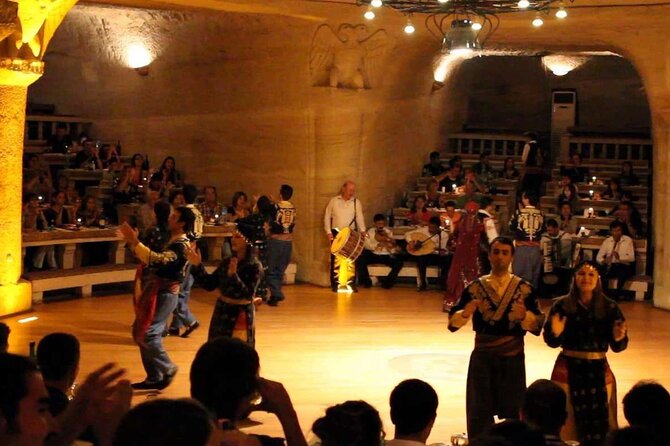
Whirling dervish ceremonies ask for quiet attention; Turkish-night shows bring folk dance, dinner and a louder room. They are different evenings, and the best choice starts with knowing which one you actually want.
Clay, coffee and a slower afternoon.
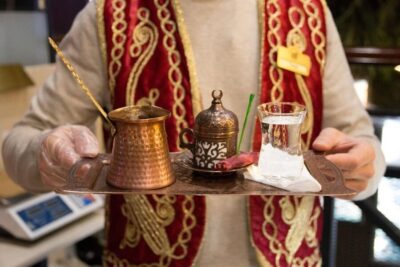
Avanos has worked red river clay for generations, and sand-brewed coffee turns a pause into a small ceremony. These workshops give the landscape a human scale.
Four wheels, four hooves, one sunset.
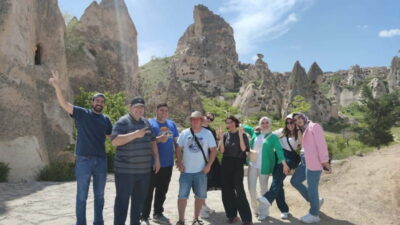
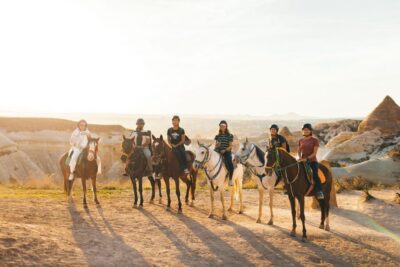
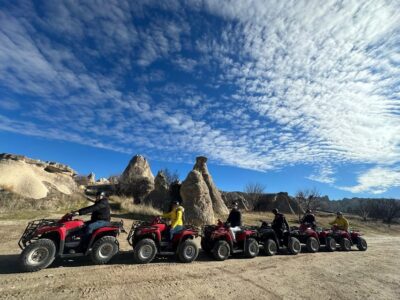
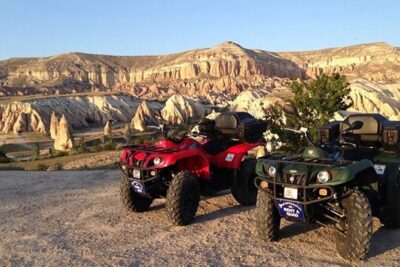
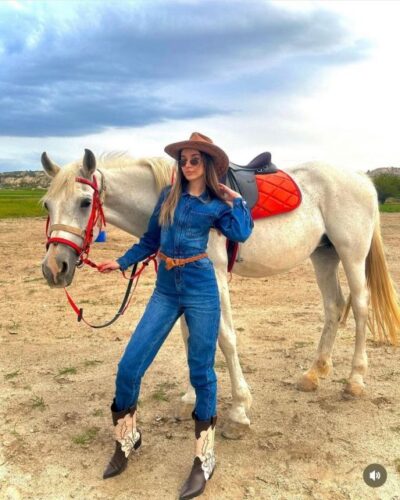
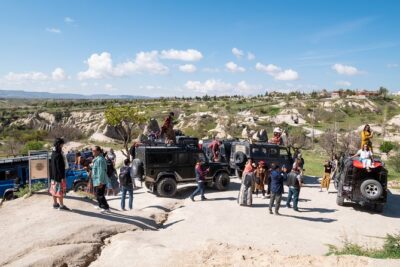
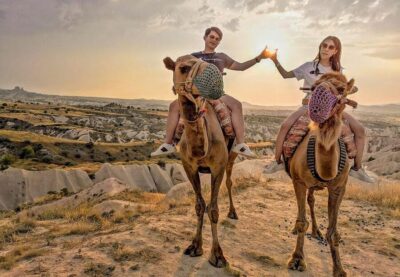
ATVs cover ground quickly; horses make the valleys feel quiet; jeeps reach rougher viewpoints. Match the vehicle to your pace and check how much trail time the transfer leaves.
The rock holds whole histories.
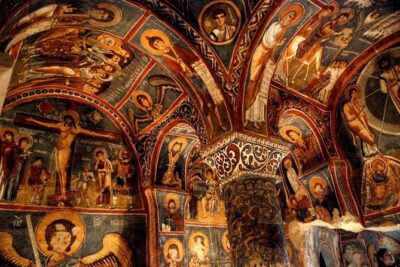
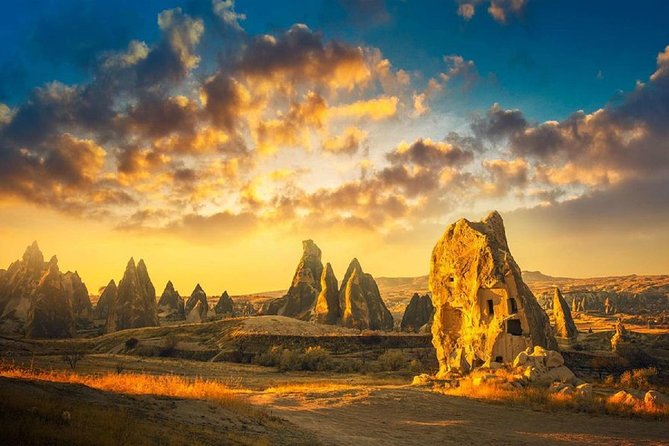
Frescoed churches sit inside the tuff above Göreme; underground cities descend through kitchens, chapels and defensive tunnels. A good guide explains why the rooms exist instead of simply counting them.
Pick Cappadocia by horizon.
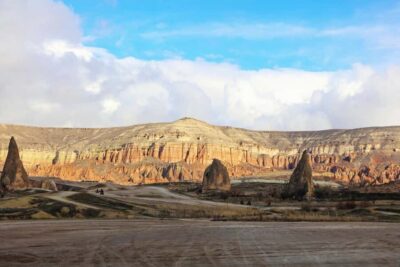
Balloons own the sky, the Red Route stays close to the fairy chimneys, the Green Route reaches Ihlara and the underground cities, and the valleys make room for slower rides.

Know what you’re after?
Twelve ways into the same landscape — choose the pace that sounds like your day and compare the real options behind it.
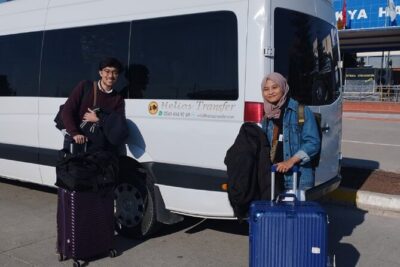
Choose the road before the ticket.
Some days stay close to Göreme; others run south to Ihlara or begin with a flight from Istanbul. These collections make the transport and geographic reach visible first.
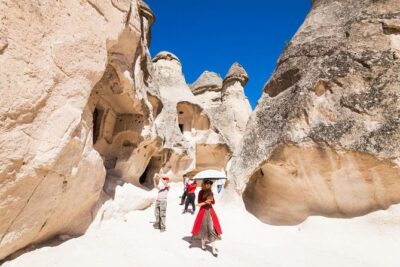
Three days, done right.
Three days are enough to see Cappadocia from above, across the north and deep under the south. Keep the balloon morning flexible for weather.
 Day 1
Rise with the balloons
Fly at sunrise, return for breakfast and keep the afternoon light: Göreme’s lanes, a viewpoint and an early cave-room night.
Choose the flight →
Day 2
Churches and fairy chimneys
Take the Red Route through the Open-Air Museum, Paşabağ and Avanos, then save the last light for an ATV or horseback trail.
Plan the Red Route →
Day 3
Go south and underground
Descend into an underground city, walk part of Ihlara Valley and finish at Selime. It is the longest road day, so keep the evening easy.
Plan the Green Route →
Day 1
Rise with the balloons
Fly at sunrise, return for breakfast and keep the afternoon light: Göreme’s lanes, a viewpoint and an early cave-room night.
Choose the flight →
Day 2
Churches and fairy chimneys
Take the Red Route through the Open-Air Museum, Paşabağ and Avanos, then save the last light for an ATV or horseback trail.
Plan the Red Route →
Day 3
Go south and underground
Descend into an underground city, walk part of Ihlara Valley and finish at Selime. It is the longest road day, so keep the evening easy.
Plan the Green Route →
New routes, flights and cave-country days.
 ★ 5.0Private Cappadocia Tour with Guide & DriverFrom $853 reviews
 ★ 5.0Underground City and Hıkıng Tour İn CappadociaFrom $943 reviews
 ★ 5.0Private Cappadocia Food and Culture Tour: Turkish Cooking ClassFrom $2803 reviews
 ★ 5.0Private Cappadocia Tour w/Chimneys and Goreme Open Air MuseumFrom $2013 reviews
 ★ 5.0Cappadocia Green TourFrom $573 reviews
 ★ 4.5Cappadocia Day Tour From IstanbulFrom $6203 reviews
 ★ 4.5Best Cappadocia Private TourFrom $803 reviews
★ 4.5Cappadocia Green TourFrom $863 reviews
★ 4.5Best Cappadocia Private TourFrom $803 reviews
★ 4.5Cappadocia Green TourFrom $863 reviews