
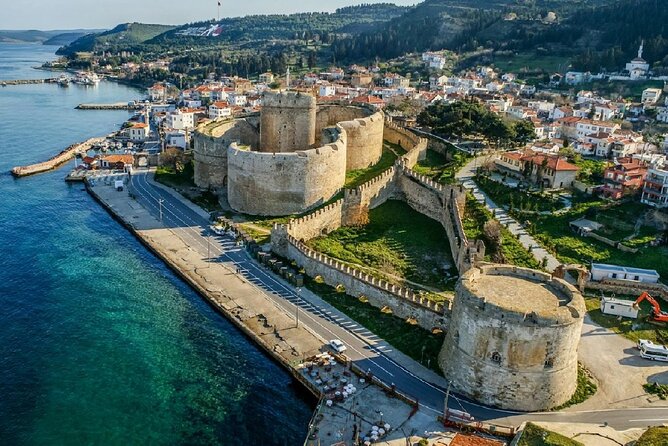
Reviewed · GOREME HOT AIR BALLOON TOURS
7 Day Istanbul-Cappadocia-Ephesus-Pamukkale Tour (Balloon Ride)
You get structure, not stress, across four iconic regions.
I like that this plan strings domestic flights with guided touring, so you spend your energy on the big sights instead of schedules. I also like the mix of monumental cities and hands-on wonders, from Sultanahmet’s historic center to the thermal terraces of Pamukkale. The one thing to weigh is the optional balloon ride, since it depends on weather and may require flexibility.
What I really like is how the days are built around the most efficient order of seeing things, with a clear handoff between Istanbul, Cappadocia, Ephesus, and Pamukkale. The touring style also matters here: Istanbul is a walking day with a private guide, while Cappadocia gives you a longer route through valleys and rock-cut sites, ending with an overnight in a cave hotel. If you prefer to move at a steady, guided pace, this rhythm fits.
The main drawback to consider is that some entries are not included, and the balloon is definitely not included in the base price. If you hate paying extra on the fly, build a buffer for things like mosque and museum admissions, plus any lunches or drinks that are explicitly not covered.
Key highlights worth knowing before you go
- A single route, four big stops: Istanbul, Cappadocia, Ephesus, and Pamukkale in about a week, tied together with domestic flights.
- A cave hotel night in Cappadocia: You sleep in the rock-cut style that makes Cappadocia feel like Cappadocia.
- Curated guided touring: Ephesus and Istanbul are guided with set priorities, while Cappadocia combines viewpoints, valleys, and underground sites.
- Balloon ride is optional and weather-dependent: You can refund if the flight is canceled due to weather, but you still need the right conditions.
- Support that keeps the trip moving: Feedback consistently points to strong coordination, including help from Ibrahim, which is a big deal when you are tight on time.
First impression: what this tour does well on a tight timeline
If you only have one week, Turkey can feel like a juggling act. This package is built to remove the juggling. You get planned transfers, guided sightseeing blocks, and domestic flights between regions, so you do not burn vacation hours on complicated logistics.
The value comes from the “glue” between places. Istanbul has a dense historic core, Cappadocia is spread across valleys and viewpoints, and Ephesus plus Pamukkale are their own day-to-day worlds. Linking them by air is what lets you keep the pace while still seeing the major hits.
Also, this is set up for either small group travel (up to 15) or private touring. That matters for how quickly you move through sites, where you end up for viewpoints, and whether you can ask questions without feeling rushed.
A few more Istanbul tours and experiences worth a look

Price and included value: what $1,750 buys you and what it does not
At $1,750 per person, you are paying for a package that includes a lot of the “hard parts” of travel. The tour includes domestic flights between cities, breakfast (5 meals) and lunch (4 meals), and entrance fees for the sights that are explicitly listed as included. You also get hotel transfers and guided touring across multiple destinations.
That said, you are not buying every possible ticket and meal. Drinks during lunch are not included. Some major stops show admission as not included, including things like Hagia Sophia’s current access status and Topkapi Palace, plus several other site categories. The balloon ride is also not included in the base package price.
The smart way to judge this price is to compare what you would pay to arrange these same elements yourself: flights, multiple guides, and the daily transfer effort. In a week, that coordination is often what costs the most time and headspace. If you want the trip to feel organized on day one and still organized on day seven, this package aims at that.
Istanbul on foot: Sultanahmet to the Bosphorus in one guided sweep
Your first full sightseeing day in Istanbul is a classic route through the Sultanahmet area. This is a walking tour, with a private guide included, and you can set your own pace for lunch since lunch and some transportation are paid separately.
What I like about this structure is that it groups places that are close together geographically. You start with Sultanahmet Square, plus the Hippodrome context. You will see the Serpentine Column, the Egyptian Obelisk, and the German Fountain of Wilhelm II. Those details matter because they turn what looks like random stone monuments into a story about Roman and Byzantine-era public life.
Next, you move to Hagia Sophia Grand Mosque. The tour notes the building’s long identity: Byzantine origins under Justinian I, later conversion during Ottoman times, and its use as a museum for nearly 75 years before returning to mosque function. Admission is listed as not included, so you should plan for an extra ticket cost if you want to go inside.
Then comes the Blue Mosque. This stop is free for the tour, and it is famous for the six minarets and the Iznik tile work. Even if you have seen photos, it lands differently in person because the scale is huge and the tile details draw your eye.
From there you hit Topkapi Palace and the Basilica Cistern. Topkapi is listed as not included, but it is a major anchor in any Istanbul plan. The palace served as an administrative and residential center for Ottoman sultans for centuries. The Basilica Cistern is underground and built to meet the city’s water needs, later used for events and museum-like viewing.
You end the day with the Grand Bazaar and a Bosphorus Strait overview. The Grand Bazaar is free in the plan, and it is presented like an all-in-one sensory market stop, with carpets, jewelry, antiques, silk, and spice shops. After that, the Bosphorus segment gives you a sense of Istanbul’s split between Europe and Asia, plus the major bridge landmarks.
Practical note for your time and energy: this is a lot of “big name” stops in one day. Wear comfortable shoes. If you want photos, plan extra minutes at Blue Mosque and the cistern, where details are worth pausing for.
The Istanbul day’s biggest win, and the one thing to plan around
The biggest win is the private guide format for a walk-heavy day. You get a focused explanation at each step instead of wandering through Istanbul like a lone tourist with a phone map.
The one thing to plan around is admissions that are marked not included. If you want to enter everything that looks important, add a travel budget buffer for tickets you pay at your pace. Also, Hagia Sophia and Topkapi can have rules that change based on current operations.
Flying to Cappadocia: why this “multi-flight” plan actually works
The Cappadocia portion starts with an early pickup and a transfer to the airport, then a flight from Istanbul’s SAW or IST area routing to the region. Your tour then continues directly into a South Cappadocia day route and ends with an overnight in a cave hotel.
Two things make this approach smart. First, you avoid the all-day bus grind. Second, Cappadocia’s best scenery is spread out, so having the time to see valleys, viewpoints, and rock-cut sites in a deliberate order is what turns a “quick stop” into a real Cappadocia experience.


South Cappadocia day: Kaymakli, Uchisar, and the valley sequence
In Cappadocia, the tour uses a classic trio of “underground, lookout, and scenery” to pace the day. You start at Kaymakli Underground City, one of the larger underground cities carved into soft volcanic rock. The plan describes multiple levels and areas like tunnels, living quarters, storage rooms, stables, kitchens, and ventilation shafts. This is where you get the practical sense of how people survived persecution and invasions, not just how the rocks look.
Then you move to Uchisar Castle, a natural rock formation and the highest point in Cappadocia. Even if you are not a history buff, this is a viewpoint stop that helps you understand the scale of the area. From the top, you can see fairy chimneys, valleys, and distant mountains.
After that, the route leans into photography and walking-lite scenery: Love Valley, Red Valley, and Çavuşin Village.
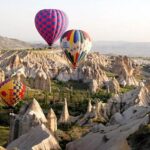
- Love Valley is known for distinctive rock formations shaped by volcanic activity and erosion. It is popular for hot air ballooning and offers great photo angles, especially around sunrise and sunset. Admission is listed as free in the plan.
- Red Valley brings the color story, plus ancient rock-cut churches and cave dwellings. It is also noted for sunsets.
- Çavuşin Village gives you rock-cut dwellings and churches, with the Church of St. John the Baptist mentioned as a specific site.
This sequence works because it alternates between “learn something” (Kaymakli), “orient yourself” (Uchisar), and then “enjoy the scenery” (valleys and village). That rhythm keeps the day from feeling like one long drive with stops that blur together.
Göreme Open-Air Museum and Pasabag: the stops that feel like Cappadocia’s core
The next Cappadocia day focuses on the rock-cut religious and icon-style sites that most people picture when they think of Cappadocia.
You start with Göreme Open-Air Museum, a UNESCO World Heritage Site in the plan. It is known for rock-cut churches and monasteries from the Byzantine period, with well-preserved frescoes. Admission is listed as included, which is a nice win since this is often one of the paid highlights.
Then you go to Pasabag, also called Monks Valley. This is where the fairy chimney formations are the star. The plan notes that some chimneys have multiple caps, and that you can also see ancient dwellings and churches carved into the rock. Pasabag is listed as admission included, so you get access without paying extra.
After that, you get a viewpoint option at Göreme Panorama. It is listed as free. This is a “look at everything from above” stop and gives you a wide view of fairy chimneys plus the Göreme Open-Air Museum area.
Devrent Valley comes next, also known as Imagination Valley. The plan positions it as a natural formation stop, with rock shapes that resemble animals. This one is listed as free, and it is also a good palate cleanser after museums and churches.
You finish the route with stops at Ürgüp and Avanos. Ürgüp is described as having historical roots and being known for cave hotels, plus local wineries. Avanos focuses on pottery heritage, with a chance to try or watch activities tied to pottery, Turkish carpet weaving, and hand-made onyx making. That hands-on angle is a nice change from stone monuments.
The balloon ride: worth it, but read the fine print in your head
The hot air balloon ride is an optional activity and not included in the base tour price. The plan notes that you should reserve it through a special request during booking.
Here is the key reality check: balloon flights require optimum weather conditions, and flights are subject to cancellation by the Civil Aviation Authority at any time. The good news in the plan is that if the balloon reservation is canceled due to weather conditions, you get a full refund. The trade-off is that you should not structure your trip around balloon expectations alone.
If balloon is your top reason for choosing Cappadocia, I think this tour still makes sense because Cappadocia has enough solid sightseeing that a weather cancellation does not leave you with a wasted day. You still have underground cities, valleys, and viewpoints built into the schedule.
Ephesus: walking through a port city and the Seven Churches connection
After Cappadocia, you fly to Izmir as the bridge point, then you base into Ephesus and surrounding sites. The Ephesus day includes the Ancient City itself, plus a route that covers key structures and the nearby Virgin Mary area.
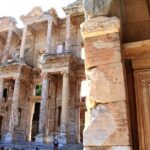
The Ancient City of Ephesus stop is marked as included for the admission fee, and the plan frames Ephesus as a major port city for multiple civilizations. It also emphasizes its connection to early Christians and its mention as one of the Seven Churches in the Book of Revelation. You will see the Library of Celsus, Temple of Hadrian, and the Great theater, plus more.
The second Ephesus stop repeats the Celcius Library, separately timed for a shorter look, and admission is listed as included. That double framing makes sense. The library façade is one of the most photographed elements of Ephesus, and it is also the easiest place to see how the city’s scale worked.
Then you go to Meryemana, The Virgin Mary’s House, located on Bulbul Mountain, about 9 km from Selcuk. Admission is not included, so again, expect to pay if you want to enter. The plan references the tradition that Saint John brought Mary to this house after Jesus’ death and that Mary spent her last days there. Even if you approach it as faith history rather than strict scholarship, it adds depth to the Ephesus story.
You finish with the Temple of Artemis. The plan notes it as one of the Seven Wonders of the World, tied to Lydia King Croesus, and it is listed as free for admission in the program.
Pamukkale: thermal terraces and why timing matters
Pamukkale is often described like it is one single attraction, but the experience is really two parts: the travertine terraces and the spring-fed pools.
You start at Hierapolis Arkeoloji Muzesi, marked as admission included. Hierapolis is the Greek city converted into a museum area, and the plan notes that it has been visited for thermal springs since ancient Greeks and was added as UNESCO heritage in 1988. This stop gives context so Pamukkale is not just a photo stop.
Then you get Pamukkale Thermal Pools, admission included. The plan’s name translation is included as Cotton Castle, tied to the appearance of the carbonate deposits left by flowing thermal spring water. It also notes the connection to healing skin diseases.
Next is the Cleopatra Pools, located above the Pamukkale travertine and fed by the same hot springs water. Admission is not included for that stop. The tour notes that it is amazing and that you can bath and swim there, and that it was built as a pool for Cleopatra. Whether you treat the Cleopatra story as historical or as legend, the practical benefit is what you can do here, the warm water experience.
Return flight to Istanbul: keep your final day flexible
On the way back, the tour includes a flight from Denizli Airport to Istanbul. Once you arrive, the team greets you at either Sabiha Gökçen or Istanbul Airport and transfers you to your hotel.
Then you get a final day in Istanbul with an airport transfer arranged based on your international flight schedule. The important point for your sanity is that you can ask for an extension if you want more Istanbul time, and your airport transfer can be moved accordingly.
If you plan to add an extra night, keep in mind that Istanbul is easiest when you can slow down and not feel rushed between attractions.
Who this tour is best for (and who should think twice)
This tour is a strong fit for you if you want a week that covers the major Turkey highlights with guided structure and domestic flights. It also suits you if you like the idea of staying in a cave hotel for authenticity points without having to research each lodging detail yourself.
It is also a good fit if you want someone to coordinate your route, flights, and daily guide handoffs. The support theme in feedback, including help from Ibrahim, is exactly what you want when you have limited time and you do not want to be the person solving problems.
I would think twice if you:
- Are very ticket-sensitive and hate paying extra for admissions marked not included.
- Want a balloon ride at all costs and cannot tolerate weather-based uncertainty, even with refund protection.
- Prefer fully free-form travel with no set sightseeing order.
Tips to make your week smoother
If you do book, these are the choices that usually save the most time and stress.
First, plan your personal budget with ticket gaps. Even with included admissions, some major entries are marked not included. Add a little extra for mosque and palace style stops, and for drinks if lunch is included but beverages are not.
Second, keep your camera charged and your shoes comfy. Istanbul is a walking day. Cappadocia involves viewpoints and valley stops. You do not want sore feet for the big photo moments.
Third, treat the balloon as optional in your mental plan. If it happens, great. If it does not, you will still have plenty of Cappadocia scheduled.
Should you book this tour?
I think you should book if you want a guided, time-efficient route that hits the big pillars of Turkey: Istanbul, Cappadocia’s rock-cut sights, Ephesus’ ancient ruins, and Pamukkale’s thermal terraces. The value is strongest when you want someone to handle the connections between cities via domestic flights, while you enjoy the sights with expert guidance.
Skip it or adjust expectations if you want everything included, since several key admissions and beverages are not included, and the balloon is optional. Also, if your schedule cannot flex at all due to balloon weather cancellation rules, know that balloon operations depend on conditions.
If you want a worry-light week that still feels like real Turkey, this one is built for that.
More 7-Day Experiences in Istanbul

More Tours in Istanbul

More Tour Reviews in Istanbul

Not for you? Here's more nearby things to do in Istanbul we have reviewed


Goreme Hot Air Balloon Tours, compared.
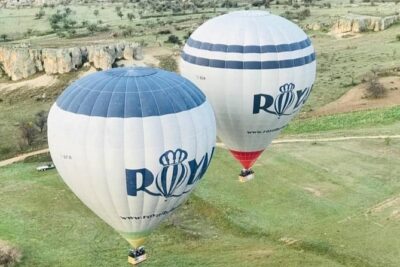 ★ 5.0Cappadocia Hot Air Balloon Ride / Royal BalloonFrom $1336,829 reviews
 ★ 5.0Goreme Hot Air Balloon Flight at SunriseFrom $1424,924 reviews
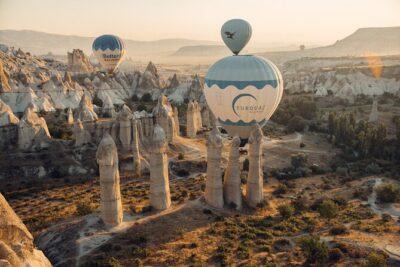 ★ 5.0Cappadocia Hot Air Balloon Ride/ Turquaz BalloonsFrom $1753,330 reviews
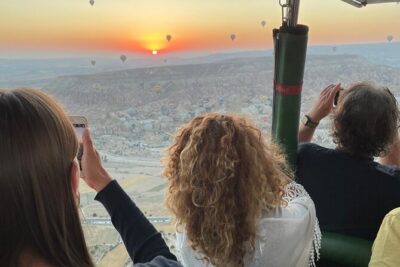 ★ 5.0Cappadocia Sunrise Hot Air Balloon Flight / Discovery BalloonsFrom $1192,882 reviews
 ★ 4.8Goreme Hot Air Balloon Flight Over FairychimneysFrom $1592,347 reviews
 ★ 4.9Göreme Sunrise Hot Air Balloon FlightFrom $1831,255 reviews
 ★ 5.0Sunrise Hot Air Balloon Flight Over Göreme & Fairy ChimneysFrom $1141,253 reviews
 ★ 4.5Cappadocia Hot Air Balloon Tour Over FairychimneysFrom $661,196 reviews
Browse the lists this tour appears in