
Reviewed · CAPPADOCIA WHIRLING DERVISH TOURS
Göreme: The Original Dervish Ritual in Konya or Cappadocia
A dervish ritual hits different in a historic building. This tour brings you to real ceremonies, either in Konya at the Mevlana Art Center or in Cappadocia at Saruhan Kervansaray. I like the hands-on structure, with pickup and a specialist guide that keeps the day moving.
Two things I especially value: the chance to see the ritual set up by the Mevlana association in Konya, and the way the Saruhan stop gives you context before the ceremony starts. One possible drawback to plan around is the strict rules for shooting, since cameras and video are not allowed during the ceremony.
Key things to know before you go
- Two ceremony options: Konya at Mevlana Art Center or Cappadocia at Saruhan Kervansaray
- Hotel pickup and drop-off from multiple towns, including Göreme, Uçhisar, Ortahisar, Çavuşin, and Konya
- Saruhan Kervansaray visit includes a guided tour (about 1.5 hours) plus photo time
- No cameras during the ritual (expect a later photo window only after it concludes)
- Şeb-i Arus (Dec 7 to 17, 2024) option aligns with Mevlana Celaleddin Rumi remembrance ceremonies
- Not for everyone if you have mobility issues, claustrophobia, epilepsy, motion sickness, or need to travel with a baby under 1
Göreme to Konya or Cappadocia, a dervish ritual with real local rhythm
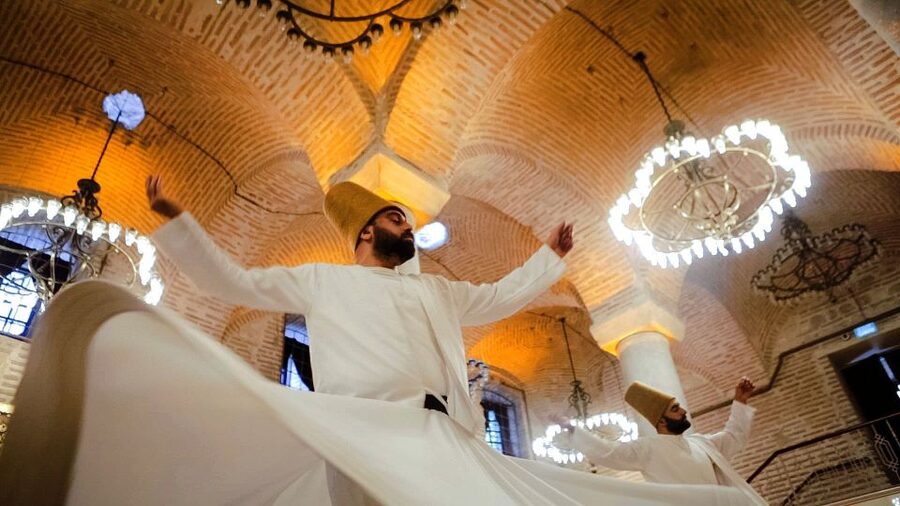
This is one of those activities where the setting does half the work. If you pick the Konya program, you’re heading to the Mevlana Art Center for the Şeb-i Arus celebrations around Mevlana Celaleddin Rumi. If you pick the Cappadocia option, you watch the ceremony in the older-caravanserai mood of Saruhan Kervansaray, which already feels like you stepped into a different pace of time.
I like that the day is built around the ceremony, not around filler. And you get a guided component at Saruhan, so you’re not just watching movements without any sense of what you’re seeing. The big watch-out is the filming and audio restrictions, so bring your attention, not your upload plan.
You can also read our reviews of more tours and experiences in Goreme.


Choosing Konya’s great ceremony vs Cappadocia’s Saruhan experience
Your choice depends on what you want most: the scale of the Konya program or the laid-back, older-stone feel in Cappadocia.
If you’re booking for the Şeb-i Arus period, the tour notes that the 751th Reunion Anniversary Commemoration Ceremonies (Şeb-i Arus) happen between 07 and 17 December in 2024. That’s the date window tied to the death anniversary commemorations for Mevlana Celaleddin Rumi. In that case, you can join from Cappadocia or from Konya, with pickup timed to get you there with enough runway.
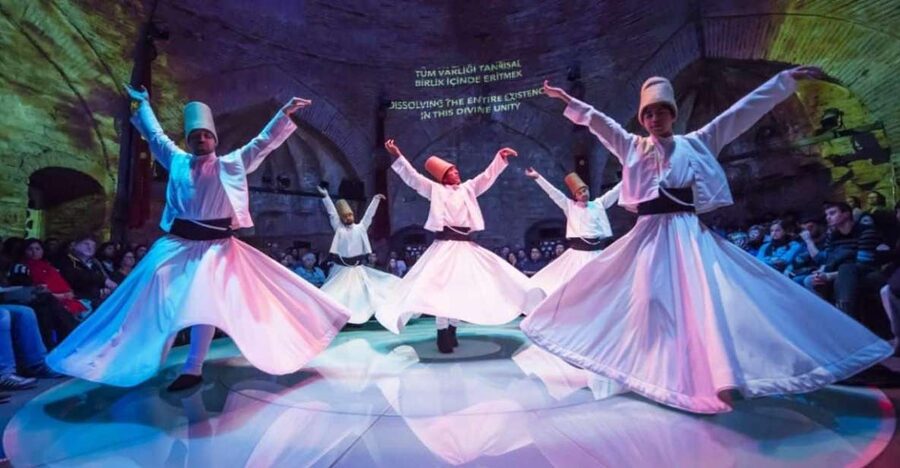
If you choose the Cappadocia ceremony side, the highlight is the authentic dervish ceremony experience in Saruhan Kervansaray. The itinerary still makes room for a stop and guided visit at Saruhan, which is a good thing. It lets you understand the space and settle in before the ritual begins.
Pickup timing that actually matters, Konya vs Cappadocia departures
The timing is not random. It changes based on where you start, and that affects how relaxed you feel when you arrive.
From Cappadocia pickup points, you’ll be picked up minimum 4 hours before the ceremony. From Konya pickup, it’s about 1.5 hours before. That difference makes sense when you consider transfer time and the fact that ceremonies, especially during Şeb-i Arus, don’t run on your schedule.
You also get multiple pickup options, including Çavuşin, Uçhisar, Göreme, and Ortahisar in Cappadocia, plus Konya itself. You’ll want to be ready early, and the activity asks you to wait in the lobby 5 minutes before the pickup time.
The ride and the 20-minute stop, why it’s worth paying attention
After pickup, your route includes a brief stop (listed as about 20 minutes at Van). For a ceremony day, that kind of break is more useful than it sounds. You get a chance to stretch, reset, and avoid arriving hungry, tired, or stressed.
It also helps you manage the biggest practical variable with these programs: the ceremony itself is structured and rules-focused. When you feel rushed, you miss the details that make the ritual understandable and meaningful.
Saruhan Kervansaray: guided time in a caravanserai you can read with your eyes
One of the best parts of this experience is that you’re not dropped into the ceremony cold. You pause at Saruhan Kervansaray for a guided visit of about 1.5 hours, plus a photo stop.
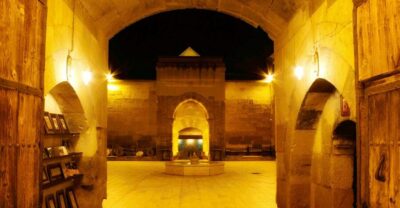
A caravanserai is basically a historic stopover building for travelers, and Saruhan’s structure has that old-world heft. The guided portion helps you look past the wow-factor and start noticing details that make the building feel lived-in by history. You also get a chance to frame photos around architecture during the photo stop, before the ceremony rules tighten up later.
Practical note: the ceremony restrictions apply during the ritual itself. So treat Saruhan as part of your photo plan, not just a scenic detour.

Inside the Mevlana Art Center for Şeb-i Arus, what to expect step by step
If you’re going to Konya for the great ceremony, your ride ends at the Mevlana Art Center. The tour description is clear that you’re accompanied on the journey, and the ceremony presentation is prepared by the Mevlana association.
Here’s the sequence you can expect, based on what the ritual is described as doing in the program:
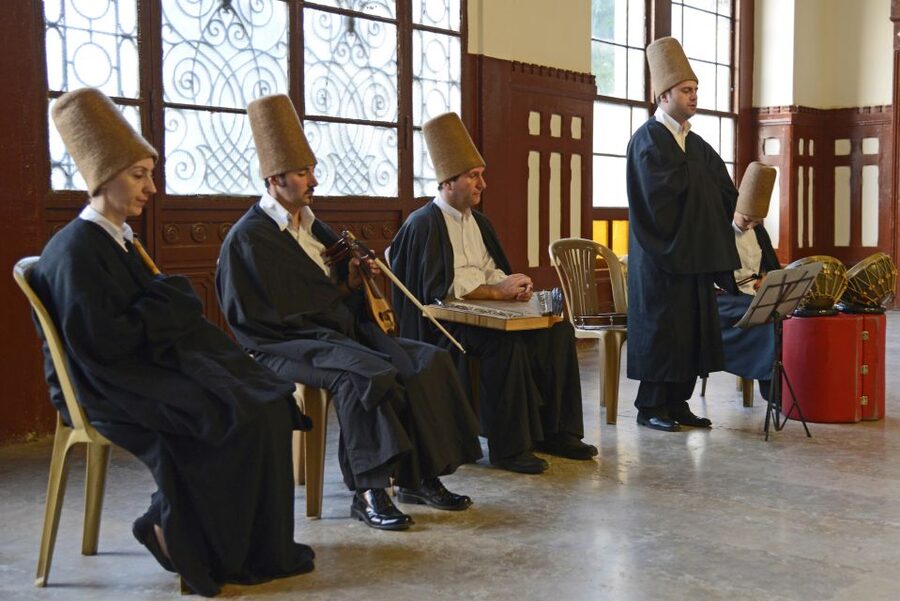
- You’ll hear reed music and drum at the start.
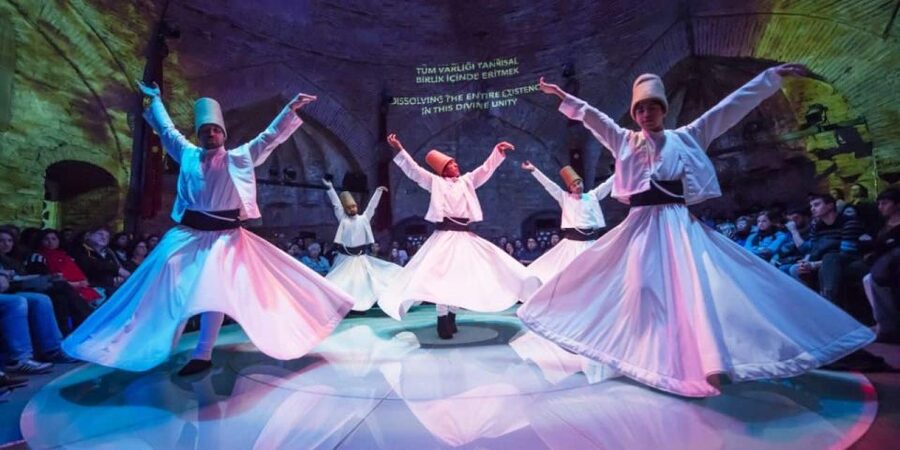
- The dervishes move through prayers and formal parts before the whirling begins.
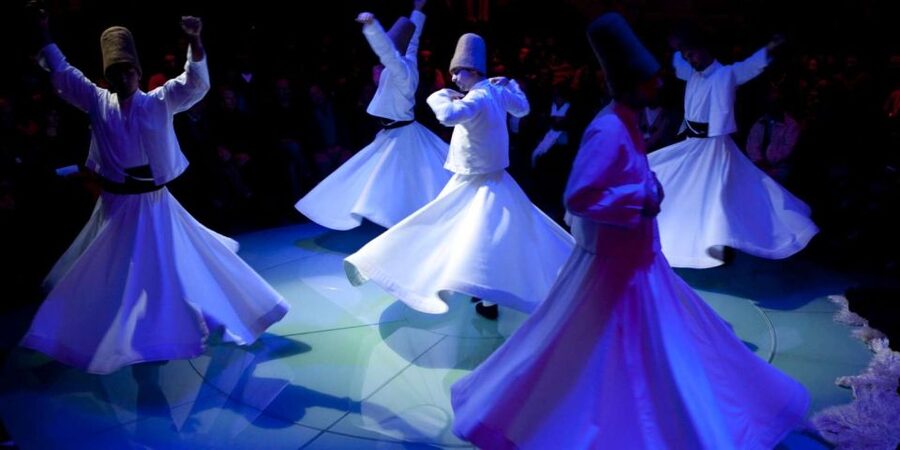
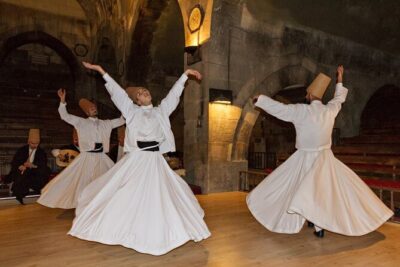
- The whirling section is the visual centerpiece, and it builds a kind of focused trance effect in the room.
I like that the tour acknowledges you may want help understanding what you’re seeing. Some participants mention a small booklet that helps make sense of the movements. That’s a smart idea on their side, because the whirling looks simple until you realize how structured the whole ritual is.
Also, if you’re booking specifically for the Şeb-i Arus dates (07 to 17 December 2024), you’re joining a major commemorative period around Rumi. The event is designed to feel ceremonial and grand, not casual.
Ceremony etiquette: what you can and cannot record, and how to prepare your expectations
This is where you should manage expectations early, so you do not waste emotional energy mid-ceremony.
The rules are strict:
- Cameras are not allowed
- Professional cameras are not allowed
- Video recording is not allowed
- Photography inside is not allowed
- Audio recording is not allowed
At the same time, the experience is described as giving people a short opportunity for photos at the end, when the ceremony is complete and a final dance occurs. Translation: plan to keep your camera put away during the main ritual, then follow the staff cue when photography is permitted later.
If you want the best mental experience, don’t watch it like a show. Watch it like a ceremony with rules, pacing, and meaning. You’ll likely find the old-building atmosphere makes the ritual feel more surreal and grounded at the same time.
The “feel” of the experience, surreal focus in an old space
Several people describe that special atmosphere in simple terms: old stone, solemn music, and a surreal feeling of watching something daily but not daily touristy. That makes sense. When the ceremony sits inside a historic venue, the room itself reinforces the seriousness of the ritual.
I also like that this isn’t framed as a fake performance staged for selfies. It’s structured, guided, and rule-based. That’s not just cultural respect, it helps you settle in.
And yes, there is often a short moment after the ceremony where people take photos, then the day transitions to the practical side again.
After the whirling: sherbet and a small shop, a calm landing
The tour doesn’t end the second the whirling stops. After the ceremony, you’re guided into the wrap-up.
You may be offered sherbet, and you can expect time for a short photos window if it’s announced. There’s also an onsite shop you can visit afterward. It’s a gentle way to land back in everyday mode without cutting the day off abruptly.
If you’re sensitive to pacing changes, this helps. You’re not jolted straight from ceremony intensity into a random driving schedule. You get a small buffer.
Duration and group flow, why your time on the day matters
The listed duration is 2 to 6 hours, depending on starting times. That wide range is a hint that the itinerary changes based on whether you’re joining a timed window in Konya, a Cappadocia ceremony option, or the Şeb-i Arus dates.
Here’s the takeaway: if you choose the Konya side, plan for a longer day because you’re traveling from Cappadocia and there’s a pick-up buffer. If you choose a local Cappadocia option, you’ll likely have more of your day left for Göreme and nearby.
Either way, you’ll want to keep your schedule loose around that day. The ceremony is the main event, and everything else supports it.
Price and value: how $50 stacks up for a real ceremony visit
The price listed is $50 per person, with the main value coming from what’s handled for you.
You are getting:
- Hotel pickup and drop-off
- Dervish ceremony entrance ticket
- Skip the ticket line
- A specialist guide component for the Saruhan segment (and guidance through the day)
Food and drinks are not included, so you’ll still need to plan for that. But for many people, that’s exactly what makes this feel like good value. You’re paying for transportation, entry, and the ceremony access, not paying extra for a meal you may not want.
In practical terms, the price can feel fair when you consider how hard it can be to line up ceremony timing, entry, and a transfer day on your own. If you’d otherwise spend time hunting for tickets, figuring out schedules, and navigating transport, this structured option starts to look like a bargain.
Language support, and a small communication reality check
The driver is listed as English, Russian, and Turkish. That’s helpful, especially for understanding what happens next during the route.
Still, one caution comes from real-world experiences with these kinds of events: sometimes explanations depend on who is guiding on your specific departure. If you need deep English narration to understand every step, you might find it worthwhile to confirm language expectations when booking.
No matter what, the ceremony itself is mostly non-verbal. That’s part of why people find it so hypnotic. A booklet or brief cues help, but you don’t need to be an expert on Sufi practices to appreciate what you’re seeing.
Who this tour is for, and who should skip it
This experience is not for everyone. The tour notes it is not suitable for:
- People with mobility impairments
- People with claustrophobia
- People with epilepsy
- People with motion sickness
- Babies under 1 year
That’s the list you should take seriously. A ceremony setting can feel crowded, and the whirling movements plus enclosed spaces can be hard for some people.
Who it suits best:
- You want a structured, respectful way to witness whirling dervishes
- You like historic architecture and guided context, not just a quick photo stop
- You’re okay following rules around cameras and silence during the main ritual
- You prefer hotel pickup over DIY logistics in Central Anatolia
If you’re traveling with teens or you want a lot of modern commentary, you might find it less interactive. This is more about watching and learning through atmosphere than through a classroom-style explanation.
Practical tips so you enjoy every minute
A few small habits can make a big difference:
- Plan your camera strategy: keep it away during the ceremony and be ready for any official photo window after it ends.
- Bring patience for timing: pickup happens early, and the day is built around fixed ceremony moments.
- Dress for comfort: you’ll be waiting and sitting for parts of the experience, plus you’ll ride in a vehicle between stops.
- Skip heavy plans before and after: treat this as the anchor event for your day.
- If you care about understanding the ritual, grab any provided booklet and read it quickly during the calmer parts.
Also, remember food and drinks are not included. If you’re sensitive to hunger, consider having a snack before pickup so the day stays smooth.
Should you book the original dervish ritual in Konya or Cappadocia?
If you want an authentic, ceremony-first experience with pickup, entry, and historical context in Saruhan, this is a strong option. The structure makes it easier to arrive settled, and the ceremony itself is the kind of cultural moment that tends to stay with you long after the photos fade.
Book it if:
- You can follow strict photography rules during the ceremony
- You’re traveling with flexibility for an earlier departure
- You want either the Konya Şeb-i Arus program during 07 to 17 December 2024 or a Cappadocia Saruhan ceremony option
Skip it if:
- You might struggle with confined spaces, motion discomfort, or a non-interactive setting
- You need to record video or audio during the main ritual
If those points fit you, you’ll likely feel what people keep describing: a surreal, focused atmosphere created by music, movement, and the weight of historic places.
FAQ
Where are the pickup locations for this dervish ritual tour?
Pickup options include Konya, Çavuşin, Uçhisar, Göreme, and Ortahisar. You should wait in the lobby area about 5 minutes before the pickup time.
How long does the tour take?
The duration is listed as 2 to 6 hours, depending on the starting time. You’ll need to check availability to see the exact schedule options.
What is included in the price?
The tour includes hotel pickup and drop-off and a dervish ceremony entrance ticket. It also includes a skip the ticket line benefit.
Is food and drinks included?
No. Food and drinks are not included, so plan to handle meals separately.
Are cameras, video, and audio recording allowed?
Cameras are not allowed, and video recording, photography inside, professional cameras, and audio recording are also not allowed. Some parts after the ceremony may allow photos, but the main ceremony itself is restricted, so follow on-site rules.
Is this tour suitable for everyone?
No. It is not suitable for people with mobility impairments, claustrophobia, epilepsy, motion sickness, and it is not suitable for babies under 1 year.
More Tour Reviews in Goreme
Not for you? Here's more nearby things to do in Goreme we have reviewed



Cappadocia Whirling Dervish Tours, compared.
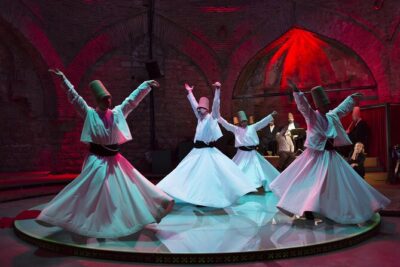 ★ 5.0Cappadocia Whirling Dervishes ceremonyFrom $24276 reviews
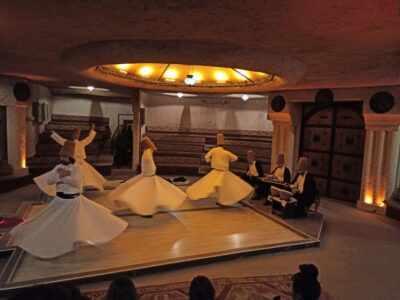 ★ 4.4Whirling Dervishes Show in Historical CaveFrom $24169 reviews
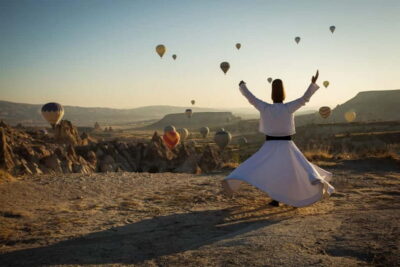 ★ 4.3Whirling Dervishes Ceremony & Optional TransferFrom $14107 reviews
 ★ 4.5Cappadocia Dervishes CeremonyFrom $7252 reviews
 ★ 4.5Live Dervishes Ceremony with TransferFrom $2251 reviews
 ★ 4.8the Original Whirling Dervish CeremonyFrom $2850 reviews
 ★ 4.4Cappadocia Dervish Ritual with live music (With 2 options)From $3443 reviews
 ★ 4.5Live Whirling Dervishes Ceremony & Sema RitualFrom $2437 reviews
Browse the lists this tour appears in