
Reviewed · TOURS
Biblical Mysteries of Cappadocia Tour
Cappadocia’s most surprising churches come with cave quiet. This tour hits Mustafapaşa (Synasos) and the Keşlik Monastery, then adds Roman-era mosaics at Sobesos and rock-cut churches in Soganlı Valley. I especially liked the way guide Iram connects what you’re seeing to the bigger story, and I liked the pace, which gives you time to actually look (not just snap photos and sprint). One possible drawback: it is a half-day and a few stretches are on uneven paths, so you’ll want moderate fitness and solid shoes, plus plan for the fact that lunch is not included.
You also get hotel pickup 10 minutes before the start, bottled water, and an air-conditioned vehicle for the ride between sites. For the price of $192.66 per person, the value is strongest when you care about history on the ground, not just viewpoints.
Key points to know before you go
- Mustafapaşa (Synasos) and an old Greek church built into an Ottoman-era village setting
- Keşlik Monastery, a cave monastery with churches dedicated to St. Michael and St. Stephen
- Sobesos Ancient City mosaics, discovered in 2002 and known for Roman mosaic art
- Soganlı Valley rock-cut churches, including frescoes and hundreds of pigeon houses
- Ortahisar workshops focused on carpet weaving and leather craftsmanship, with a short fashion show
- A half-day format (about 5 to 6 hours) that balances major sites and a lunch break in the valley
A half-day route built for “seeing the real Cappadocia”
This is one of those Cappadocia tours that feels like it’s trying to answer a simple question: where did the people live, pray, and work, and what did they leave behind? Instead of only jumping between famous lookout points, you spend the day inside villages, monasteries, and valleys where stone churches and layered cultures sit close together.
The group format is private, meaning it’s just your group in the experience (not mixed into a huge crowd). You still get the benefits of a guided program, including a licensed professional guide fee and a smooth ride via an air-conditioned vehicle.
If you like religious history, Roman art details, and human-scale village life, this route is a good match. If you want a long, slow day with lots of free time to wander at your own pace, you might feel time pressure, because the schedule packs in a lot of stone and sights.
You can also read our reviews of more tours and experiences in Goreme.

Mustafapaşa (Synasos): Ottoman-era village streets and an old Greek church
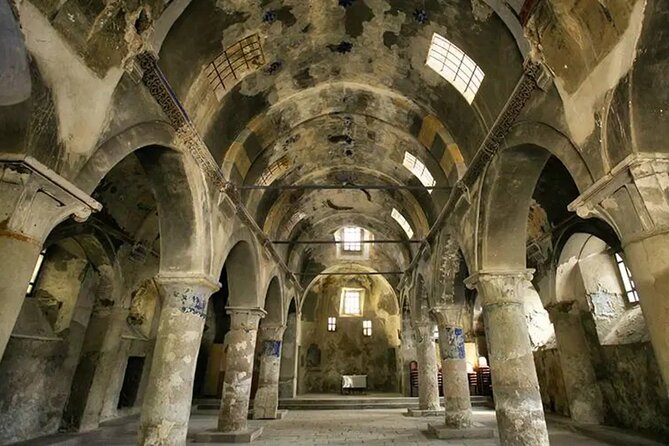
Your first stop is Mustafapaşa, also known as Synasos, a village tied to the Ottoman period before the early 20th century Turkish War of Independence. This matters because the area is described as a place where Turks and Greeks lived side by side, and the architecture reflects that mixture of communities.
What you’ll do here is straightforward, and that’s the point. You explore the village setting, look at the distinctive buildings, and then visit an old Greek church. The time is about 50 minutes, and it is enough to get oriented, notice details, and still feel like you learned something rather than just passed through.
Why I like this start: it eases you into Cappadocia’s story. You’re not dropped straight into a cave monastery. Instead, you start with a living-feeling town layer, then move into deeper underground and older ruins.
Practical tip: bring your camera, but also take a moment with your eyes only. The village character comes from building shapes and street rhythm, not just one view.
Keşlik Monastery: cave churches with St. Michael and St. Stephen
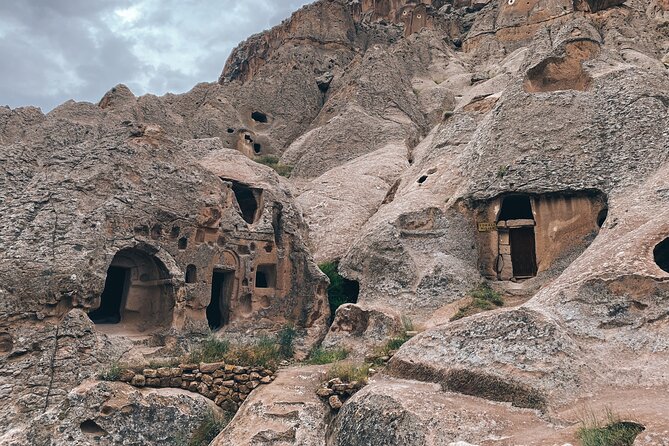
Next is Keşlik Monastery, located outside Ürgüp. This is a cave monastery complex, which means you’re not just looking at a church. You’re stepping into a whole system of rooms carved into rock.
The monastery includes two churches: St. Michael and St. Stephen, along with cave rooms. The tour also frames the site as being used across about 2,000 years. That long timeline is part of why this stop is so compelling. The area served as a gravesite in pre-Christian Roman times, and later the Christian community reworked the space into churches and religious rooms.
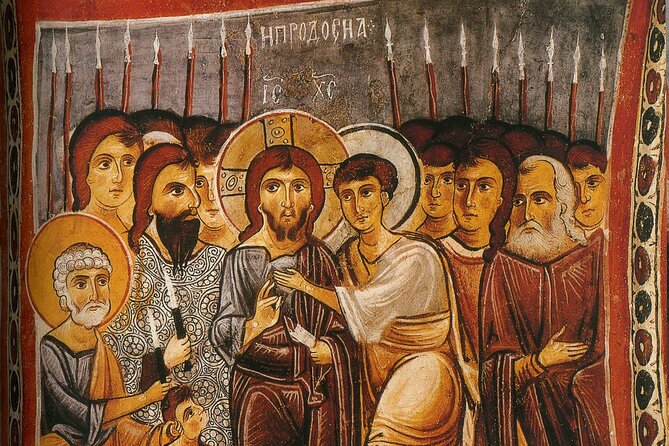
Your focus here is to discover the monastery area and see wall paintings. Even if you’re not a fresco expert, wall painting details help you connect the dots between faith and daily life, because you’re seeing how people decorated sacred space and marked it as important.
Time is about 45 minutes. That’s a good window for a cave site, because you don’t want to rush the art, but you also don’t want to overstay and feel trapped in the same stone volume.
Consideration: cave interiors can feel cooler and dimmer. Wear layers you can manage, and expect uneven rock surfaces where you step and pause.
Sobesos Ancient City: mosaics that were found in 2002
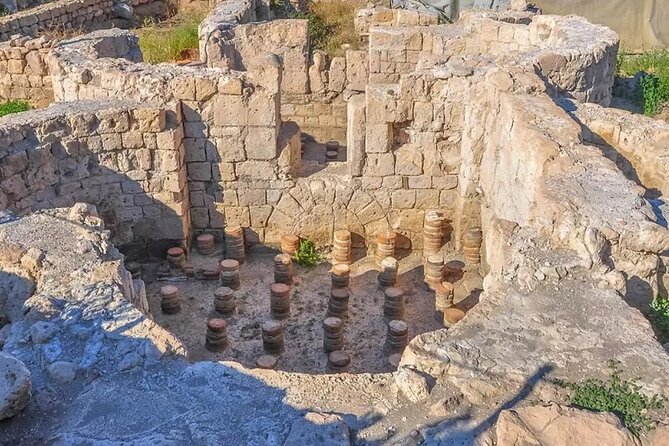
Then the tour turns more archaeological and art-forward at Sobesos Ancient City, near Şahinefendi Village in Cappadocia. This site has an interesting backstory, and it’s part of the appeal: it was discovered by treasure hunters in 2002.
What makes Sobesos stand out is how the tour describes it: it’s considered the only unique Roman ancient city in Cappadocia where you can explore mosaics. That one detail changes the whole mood of the day. Up to this point, you’re looking at churches, monasteries, and rock-cut worship spaces. Here, you’re looking at Roman visual craft, in the form of mosaic patterns.
You’ll observe the mosaics and get information about the region. The visit is about 40 minutes, and it works well because you can scan the overall design first, then come back to specific mosaic details as the guide explains what you’re seeing.
Value angle: this stop gives you something you can talk about later. “I saw Roman mosaics in Cappadocia” lands differently than another church visit, even for people who love churches.
Tip: look closely before you photograph. Mosaics can be easier to appreciate when you know what shapes or scenes you’re looking for, and that comes from the guide’s pointers.
Soganlı Valley: 10th-century churches, frescoes, tombs, and pigeon houses
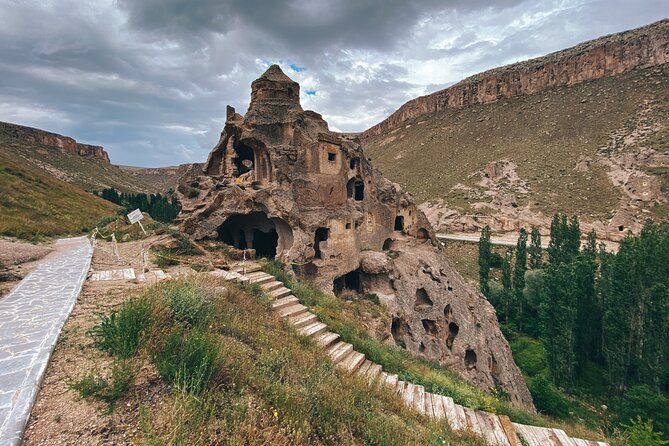
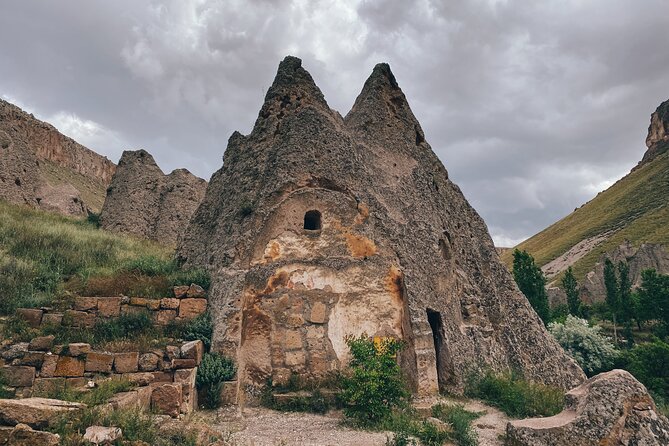
If you want Cappadocia at its most character-driven, Soganlı Valley is where the tour really shines. The valley is described as having monasteries and churches from the 10th century, with more than 20 churches across the rock-cut village area.
You’ll learn the location context too, since Soganlı is about 40 kilometers southeast of Nevşehir. Then you get the “what’s there” picture: Roman-era tombs and hundreds of pigeon houses line the cliffs. Those pigeon houses matter because they connect the ancient architecture to a practical living tradition, not just a faraway past.
You explore different cave churches and observe frescoes. The tour schedules 1 hour 15 minutes for this, and that’s plenty of time to see multiple sites. It also means you’ll have enough time to pause and let frescoes and church carvings register, rather than speed through like it’s a checklist.
Lunch break is included as time on your own, around 1 hour, in Soganlı Valley. Importantly, lunch itself is not included, so plan to buy something on site or bring snacks if you know your preferences.
What I like about this valley stop: it’s not one big monument. It’s a whole working area of faith, stone architecture, and everyday functions. Pigeon houses turn the scene into something real and lived-in, even when you’re standing in a place that feels ancient.
Consideration: this is a valley, so expect walking in and around rock surfaces. If you’re sensitive to uneven ground or have mobility limits, go slow and let your guide set the rhythm.

Ortahisar crafts: carpet weaving and a leather workshop with a mini fashion show
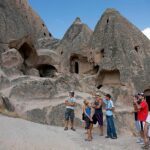
After the heavier church and ruin content, the tour shifts into something hands-on in Ortahisar. The cultural stop includes two workshops: a carpet weaving cooperative and a leather processing workshop.
The carpet weaving part connects to the ancient Silk Road idea, since the practice is described as being rooted in the region’s history. You’ll witness traditional hand-weaving, and you’ll see how local women continue to weave carpets using techniques passed down through generations. Even if you’re not shopping, watching the process helps you understand why these designs matter and why they’re still made today.
Then you go to a leather workshop. This stop highlights Cappadocia’s ties to animal husbandry. You’ll explore the leather processing and enjoy a short fashion show featuring locally produced leather goods.
Why this matters: these workshops aren’t just “look at products.” They explain how the same geography that created rock-cut churches also supported farming, husbandry, and local crafts. It’s a reminder that Cappadocia is not only about monuments.
Time is about 40 minutes. That keeps the stop focused, though it does mean you likely won’t have time for deep shopping comparisons. If you want to buy something, decide your budget early so you don’t feel rushed at the end.
Price and logistics: $192.66 for a guided half-day with pickup and water
At $192.66 per person, this is priced like a serious half-day tour. You’re paying for the guided program, transportation, and the convenience of not having to stitch together multiple rides and stops.
What you get included:
- air-conditioned vehicle
- bottled water
- licensed professional guide fee
- guide fee
What you should budget for:
- lunch is not included
- entrance fees are not included in the overall package, even though several stops explicitly note free admission and some note admission included
Here’s the practical way to think about it: the itinerary includes a mix of “free” visits and “admission ticket included” stops. That typically keeps out-of-pocket costs reasonable compared with tours where every single location has a separate paid ticket. Still, entrance costs can change and rules can vary, so if you’re budgeting tightly, carry a bit of extra cash or be ready to handle small on-site payments where needed.
The biggest logistics win is pickup. They pick you up from your hotel about 10 minutes before the tour starts, and the tour runs in English. There’s also mention of a mobile ticket and group discounts, which usually helps with smoother check-in.
Weather matters more than you’d think
This experience requires good weather. That’s not a warning sign for a dramatic outdoor trek, but it is a real factor because the itinerary includes outdoor village and valley walking, along with cave interiors where visibility and footing matter.
If weather is poor, you’ll be offered a different date or a full refund. So before you lock in your schedule, check the forecast for your travel day and have flexibility if the weather turns.
Practical tips to get the most from the day
Here’s how I’d set yourself up to enjoy every stop without losing time or comfort.
Wear and bring
- comfortable shoes with grip (valley paths and rock steps)
- a light layer for cave interiors, where it can feel cooler
- a hat and sunscreen, because some of the day is outdoors
Photography and attention
- take one slow pass through each site before you start photographing
- wait for the guide’s details on mosaics and frescoes, it makes your photos better and your memory richer
Food planning
- lunch break is built into the day, but lunch itself is not included, so decide how you’ll handle it (buy on site or plan snacks)
- bottled water is included, but you might still want extra if you run hot or walk fast
Pace expectations
- this is about 5 to 6 hours total, so it is not a marathon, but it is also not a relaxed sit-and-stare day
- the stop lengths are designed for learning and looking, so don’t plan extra detours on your own during the tour
Should you book this Cappadocia tour?
Book it if you want Cappadocia that feels grounded in places people actually lived, prayed, and worked. The combo of Mustafapaşa, Keşlik Monastery, Sobesos mosaics, and Soganlı Valley frescoes gives you multiple “types” of historic experience in one half-day, plus the practical craft stops at Ortahisar.
Skip it, or consider a different option, if you hate cave interiors, struggle with uneven walking, or you want more free time for meals and wandering. Also, if you expect lunch to be part of the price, you’ll need to plan for buying your own.
One more reason to lean in: the guide quality stands out. With Iram specifically praised for being knowledgeable, patient, and friendly, you’re likely to get the kind of explanations that turn stone and paintings into something you can actually picture.
If you’re in Cappadocia for a short stay and want a well-timed mix of churches, Roman art, and living crafts, this is a strong way to spend your day.
FAQ
How long is the Biblical Mysteries of Cappadocia Tour?
The tour runs for about 5 to 6 hours.
Where does pickup happen?
Pickup is offered from your hotel. You’ll be picked up about 10 minutes before the tour starts.
What language is the tour in?
The tour is offered in English.
Is lunch included?
No. Lunch is not included, but there is a lunch break in Soganlı Valley during the tour.
Are entrance fees included?
Entrance fees are not included as part of the overall package. Some stops are listed with free admission and some with admission ticket included, so costs may be limited depending on the stop.
What if the weather is bad?
The experience requires good weather. If it’s canceled due to poor weather, you’ll be offered a different date or a full refund.
More Tours in Goreme


More Tour Reviews in Goreme
Not for you? Here's more nearby things to do in Goreme we have reviewed



Tours, compared.
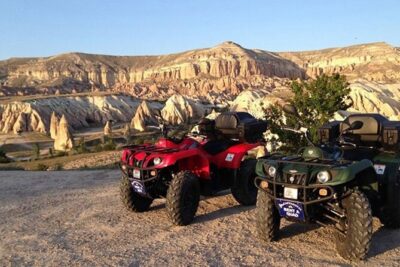 ★ 5.0Cappadocia Sunset ATV TourFrom $182,984 reviews
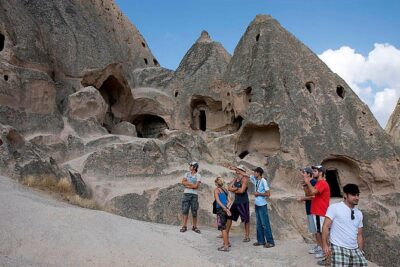 ★ 5.0Green (South) Tour Cappadocia (small group) with lunch and ticketFrom $542,317 reviews
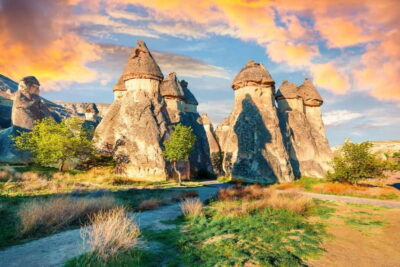 ★ 4.7Full Day Cappadocia Red and Green Combined Day TourFrom $301,998 reviews
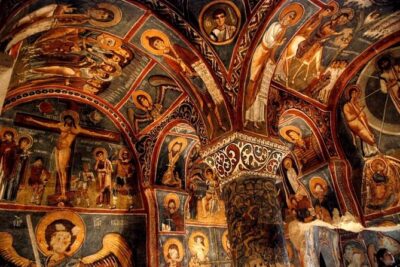 ★ 5.0Red (North) Tour Cappadocia (small group) with lunch and ticketsFrom $541,975 reviews
 ★ 4.8Sunset or Daytime ATV Adventure TourFrom $51,895 reviews
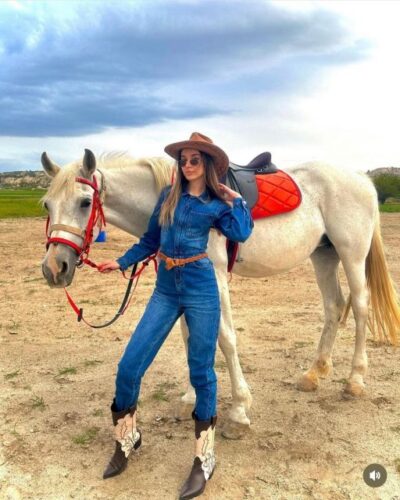 ★ 5.0Horseback Riding Adventure TourFrom $181,881 reviews
 ★ 5.0Full Day Cappadocia Tour( Red Tour + Underground City )From $181,862 reviews
 ★ 4.9Horseback Tour with Sunrise and Sunset OptionsFrom $61,755 reviews